
Architects of the Hollow Man
When Rome's salon meets Oklahoma's saloon. Alberto Moravia and Jim Thompson writing from the same blueprint.
LITERARY CRITICISM
William Gould
1/24/20262 min read
If literary purgatory has a waiting room, it probably smells like stale cigarette smoke, cheap espresso, and anxiety.
Sitting in one corner is Alberto Moravia. He’s wearing a tailored Italian suit, looking aloof, intellectual, dissecting the room with a detached European gaze. In the other corner sits Jim Thompson. He’s rumpled, sweating cheap whiskey through a denim shirt, grinning that grin that says he knows exactly where the bodies are buried because he holds the shovel.
They shouldn't know each other. Moravia wrote high-brow dissections of the Italian bourgeois soul beneath the shadow of Fascism. Thompson wrote lurid, twenty-five-cent paperbacks for the American working stiff during the Eisenhower boom. One is discussed in university lecture halls; the other was, for decades, mostly discussed by people trying to trade them for pack of smokes.
But if they started talking in that waiting room, they’d realize they were architects working from the same blueprint. They are both masters of the "Hollow Man."
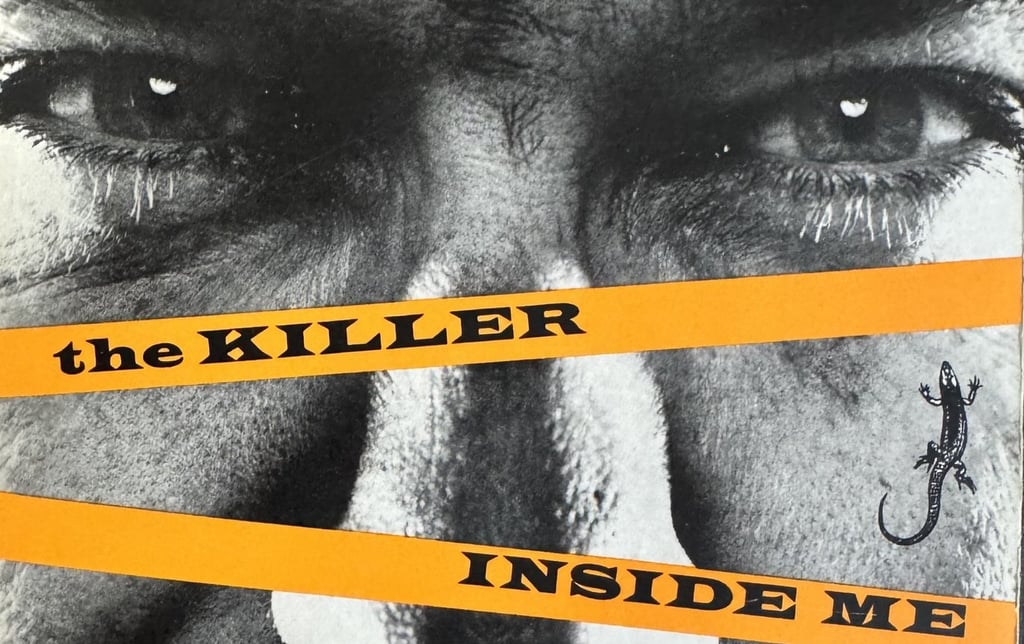
The connection hits hard when you stack Moravia’s The Conformist next to Thompson’s The Killer Inside Me. On the surface, they are worlds apart. Marcello Clerici is an upper-crust Italian desperate to join Mussolini’s secret police. Lou Ford is a golly-shucks West Texas deputy sheriff who pretends to be smarter than his dog, but only barely.
Yet, both men are devoid of a true self. They are pantomimes of men, mimicking a humanity they have studied intensely but never actually felt.
For Moravia’s Marcello, the emptiness is political trauma. He is terrified of his own abnormality, so he seeks the ultimate camouflage: the fascist state. He wants to be a cog in the machine because cogs don't have to feel guilty. He performs sanity to blend in with the herd, terrified that if he stops mimicking the man next to him, he will cease to exist entirely.
For Thompson’s Lou Ford, the emptiness is something older, darker. He calls it "The Sickness." Lou hides his brilliant, sadistic mind behind a mask of folksy clichés and deliberate mediocrity. He isn't performing sanity to belong; he's performing it the way a hunter wears camouflage.
Moravia argues that society, and the need to conform, hollows a man out until only the performance remains. Thompson argues that some men are just born hollow, and society is just the stage they stalk across.
The tragedy in Moravia is that his characters almost realize they are empty. The horror in Thompson is that his characters like it that way.